Berlin is a city of a thousand faces. At times it feels monumental, at others gritty, and then it surprises you with a quiet street, a park, or a café. You won’t manage to see everything in three days – but you can get to know its history, its contemporary energy, and several neighbourhoods, each with its own character.
Day one: Classic Berlin in the centre
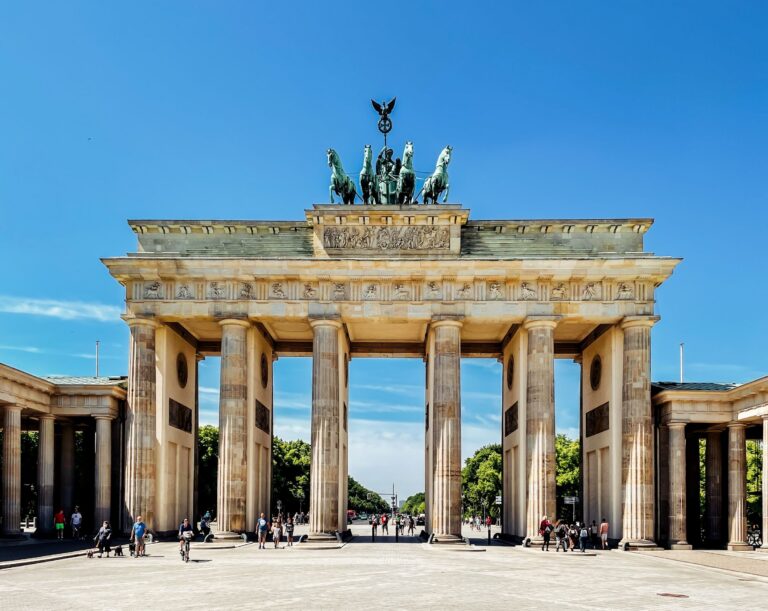
Start at the Brandenburg Gate. Nearby, you’ll find the Reichstag, the Memorial to the Murdered Jews of Europe, and the vast Tiergarten park. This part of the city allows you to understand how closely the symbols of Prussian history, the Nazi dictatorship, the city’s division, and contemporary democracy sit alongside one another in Berlin.
Continue along Unter den Linden towards Museum Island. The five historical museums form a UNESCO World Heritage site, but there’s no need to walk through the entire complex in a single visit. Choose one institution based on your interests and check current opening times and any potential renovations in advance. Spend the rest of the afternoon around the Humboldt Forum, Berlin Cathedral, and the banks of the Spree.
Stay in Mitte for the evening, or head over to the Prenzlauer Berg district. Berlin is not a city with a single representative centre; its atmosphere is made up of individual neighbourhoods. That is why it’s worth ending each evening somewhere different.
Day two: The Berlin Wall, Friedrichshain, and Kreuzberg
Start the second day at the East Side Gallery. This preserved section of the Berlin Wall, approximately 1.3 kilometres long, was transformed into an open-air gallery after 1989. It’s not just a place for photos. The paintings and the wall itself serve as a reminder of the specific history of a divided city.
Then continue across the Spree into Kreuzberg. This district is associated with migration, alternative culture, music, and the city’s transformation over recent decades. Instead of rushing from landmark to landmark, leave yourself time here for a market, a small bistro, or a stroll along the canal.
If you want to delve deeper into the history of the Wall, include the Berlin Wall Memorial on Bernauer Strasse. Compared to the East Side Gallery, it offers a different type of experience: a focused explanation of how the border functioned and how it affected the daily lives of residents.
Day three: Choose your Berlin
For art and history lovers
Choose another museum, the Topography of Terror, or one of the themed exhibitions dedicated to German history. Berlin has an exceptionally wide range of options, so one well-thought-out visit is better than rushing through three museums.
For architecture and urban life
Head to City West around Kurfürstendamm, the Kaiser Wilhelm Memorial Church, and modern department stores. You’ll see a different side of the city than in historical Mitte. An alternative is the contemporary architecture around Potsdamer Platz and the Kulturforum.
For relaxation
If the weather is nice, slow down in the Tiergarten, by the Spree, or on the Tempelhofer Feld airfield, which now serves as a vast public space. Berlin isn’t only experienced indoors. Often, it’s enough just to watch how the city’s residents use it.
Where to stay and how to get around
For a first visit, accommodation near an S-Bahn or U-Bahn station is practical. You don’t need to stay right by the Brandenburg Gate; a simple connection without many changes is more important. When choosing, consider whether you want peace in the evening, restaurants within walking distance, or nightlife.
Berlin’s public transport allows you to combine the U-Bahn, city trains, trams, and buses. Check the fare zones and current service disruptions before you travel. Walking is also suitable for the city centre – however, distances tend to be larger than they look on a map.
Berlin with a story
A three-day itinerary is just the beginning. Berlin changes according to the season, the neighbourhood, and the theme you choose. You can get to know it through history, architecture, culture, gastronomy, or everyday life. That is precisely where its strength lies – it shows a different face with every visit.
If you want to not only see the city but also understand it, head to Berlin with a guide. Together, we can tailor the programme to your time, interests, and whether you are in the city for the first time or returning for another of its thousand faces.